
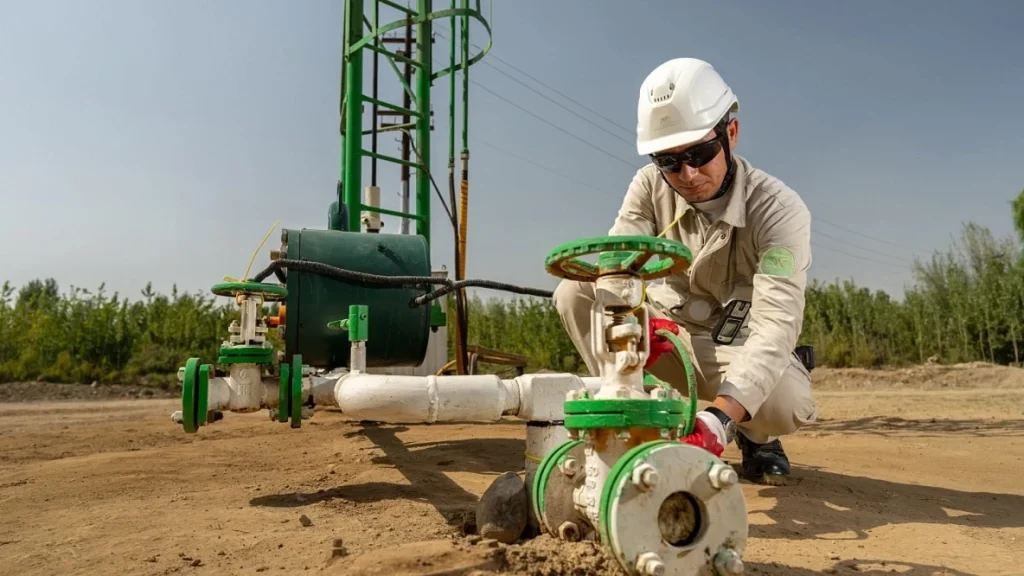
Monitoring the production of oil and process liquids is one of the key tasks in the oil and gas sector. Specialised instruments are used for this, allowing the flow rate and mass of liquid in pipeline systems to be measured accurately.
Measuring oil-gas-water mixture, which consists of oil, gas and water, is particularly difficult. To solve this, SKZh liquid quantity metersare used, providing accurate metering without first separating the stream.
Features of metering oil and gas mixture
At most oil fields the produced medium is multi-component. This complicates measurement and calls for specialised instruments.
Traditional metering methods do not always give accurate data, particularly when flow parameters change. Modern solutions capable of working under variable operating conditions are therefore used.
How the SKZh meter works
The SKZh liquid meter works by measuring the mass of liquid in the flow. During operation gas and liquid are separated, which makes it possible to determine the flow parameters more accurately.
Signals from the sensors are processed by a computing unit that calculates the flow rate and the total quantity of liquid. This gives high measurement accuracy and reliable data.
Advantages
- high metering accuracy
- measurement without first separating the medium
- handling of multi-component streams
- use in demanding operating conditions
- improved efficiency of oil production
Areas of application
SKZh liquid meters are used:
- at oil wellheads
- at production metering units
- in production monitoring systems
- in the chemical industry
- in batching processes
Importance for the oil and gas sector
Using SKZh meters provides accurate data on oil production, allows process operations to be monitored and helps optimise equipment performance. This reduces losses and improves the efficiency of field operations.
Conclusion
SKZh liquid quantity meters are an important element of metering and monitoring in the oil and gas sector. Using them improves measurement accuracy and ensures reliable production operations.