Pipeline fittings are connecting components used in the construction and operation of pipeline systems of all kinds. They are used to change the direction of a pipeline, change the pipe diameter, branch the flow of the process medium, and to shut off or service a pipeline section temporarily.
Connecting components make it possible to build reliable pipeline systems for the safe transport of liquids, gases and other process media. They are widely used in the oil and gas industry, power generation, the chemical industry and at industrial plants.
Purpose of pipeline fittings
The main purpose of pipeline fittings is to join pipes and change the parameters of the pipeline system. They are used at turns, bends and inclines, when changing the pipe diameter and when distributing the flow of the process medium.
Using quality connecting components ensures the reliability of the pipeline system and its resistance to working pressure and thermal loads.
Types of pipeline fittings
Asia Supply supplies various types of connecting components for pipeline systems:
- elbows
- reducers
- tees
- end caps
- flanges
- obturators
- insulating flange joints (IFJ)
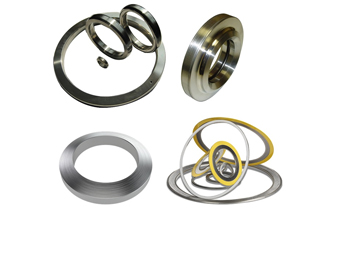
- flange gaskets of various types
- pipe supports
- steel and cast-iron fittings
- expansion joints and flexible inserts
Manufacturing standards
The pipeline fittings we supply are made to a range of international and industry standards:
- GOST
- TU (technical specifications)
- DIN
- EN
- ANSI
- ASME
This allows the products to be used at facilities with different technical requirements and in international projects.
Supply and product quality
Asia Supply sources pipeline fittings directly from leading Russian and international manufacturers. All products meet the requirements of industrial service and are used at oil and gas, power and industrial infrastructure facilities.
We deliver equipment directly to the customer's site in any region of the Republic of Kazakhstan.
Documentation and proof of quality
Every delivery comes with a set of documents confirming product quality:
- quality certificate
- certificates of conformity
- exemption letters where required
These documents confirm that the products meet technical regulations and allow the equipment to be used at industrial facilities.
Selecting fittings by process medium
For each type of process medium a suitable steel grade and protection class is selected. Carbon steel St20 is the main material for oil, petroleum products and industrial water at temperatures up to +200 °C. Low-alloy steel 09G2S is for service at low temperatures down to −60 °C, which is critical for Arctic and northern projects. Stainless steel 12Kh18N10T and AISI 304/316 are for aggressive and food-grade media.
For pipelines carrying hot media above +400 °C, heat-resistant steels 15Kh5M and 12Kh1MF are used. For drinking-water systems — parts made of bronze, brass or food-grade stainless steel.
Standardisation and interchangeability
Compliance with the international standards GOST, DIN, EN, ANSI and ASME ensures that parts are interchangeable at sites with both imported and domestic equipment. This is critical when upgrading existing plants: a part can be selected whose connection dimensions match the valves and pipework already installed.
Particular attention is paid to flange connections. The flanges we supply are available to GOST 33259-2015, DIN EN 1092-1 and ANSI B16.5 — covering the requirements of most project designs in Kazakhstan and the CIS.
Typical applications by industry
- Oil and gas: trunk pipelines, wellhead piping, tank farms
- Power generation: steam and water circuits at CHP plants, cooling loops, drainage lines
- Chemicals: process pipelines for reagent lines
- Utilities and water supply: trunk water supply and sewerage networks
- Industry: in-plant piping for process equipment
Related products
To complete your pipeline system we also offer pipeline valves and fittings — gate valves, ball valves, check valves — and spacer rings for laying inside protective casings.
Full list of pipeline connecting components
Pipeline connecting components are the parts that allow trunk and process lines to be assembled from individual pipes. They include: elbows (changing the flow direction by 30°, 45°, 60°, 90°, 180°), tees (branching the flow — equal and reducing), reducers (changing the diameter — concentric and eccentric), flanges (demountable connection of pipes and valves), end caps (fully closing the end of a pipeline), bosses and couplings, and pipe supports.
In addition to the classic connecting components, specialised parts are used: expansion joints for thermal movement, insulating flange joints (IFJ) for the electrical protection of cathodically protected pipelines, flexible inserts for vibration isolation, and hinged supports for long spans.
Pipeline connecting components — standards and size range
The pipeline components we supply are made to the main international and industry standards:
- GOST 17375-2001 / 17376-2001 — short-radius elbows in carbon and alloy steel, DN up to 1400
- GOST 17378-2001 — concentric and eccentric reducers
- GOST 17379-2001 — flange and elliptical end caps
- GOST 33259-2015 — steel flanges, DN15–4000, PN0.1–32 MPa
- DIN EN 10253-2 / EN 10253-4 — the European standard for elbows and reducers
- ASME B16.9 / B16.11 — the American standard for butt-weld and threaded fittings
Size range by diameter: from DN15 (outside diameter 21.3 mm) to DN1400 (outside diameter 1420 mm). By wall thickness — all schedules from light to extra heavy for working pressures up to 100 bar and above.
Frequently asked questions
Which parts count as pipeline connecting components?
The category includes: elbows (angled turns), tees and crosses (branches), reducers (diameter changes), flanges and counter-flanges (demountable joints), end caps and blind flanges, bosses and nozzles, threaded couplings, supports and hangers. All of these are supplied both individually and as a project set.
What is the difference between pipeline fittings to GOST and to DIN/EN?
Russian and Kazakh GOST standards are traditionally used at domestic industrial facilities and in the CIS oil and gas sector. European DIN/EN standards are applied on projects with imported equipment and in modern production lines. The main difference lies in connection dimensions and working-pressure ratings. Parts to different standards cannot be freely mixed at one site — an adapter or a single unified standard for the whole line is required.
Can connecting components be ordered to the customer's drawing?
Yes. For non-standard diameters, unusual elbow angles, special materials and bespoke projects, parts are made to the customer's drawings. Lead time is 4 to 12 weeks depending on complexity. The drawing must specify all geometric and material parameters together with marking and acceptance requirements.
What materials are used for pipeline fittings?
Carbon steel St20, St10 — for oil pipelines and industrial water. Low-alloy steel 09G2S — for service at low temperatures down to −60 °C. Stainless steel 12Kh18N10T, AISI 304/316 — for aggressive and food-grade media. Heat-resistant steels 15Kh5M, 12Kh1MF — for high-temperature steam. Bronze and brass — for drinking-water systems.
What documentation is supplied with the parts?
The standard set: the manufacturer's product quality certificate, a certificate of conformity with technical regulations, a material certificate (chemical and mechanical composition) and, where required, a permit for use from the Committee for Industrial Development of the Republic of Kazakhstan.
What are the delivery times for connecting components within Kazakhstan?
Standard GOST sizes from stock — 3–5 working days with delivery to any region of Kazakhstan. Made-to-order items — 2–6 weeks depending on the standard and material. Urgent deliveries of large batches are agreed individually.
Related products
For a complete pipeline system supply we also offer pipeline valves and fittings — gate valves, ball valves, check valves, control valves — and spacer rings for laying pipelines inside protective casings.