Pipeline valves are equipment installed on pipelines, units and vessels to control the flow of the process medium. Their primary function is to regulate, shut off, distribute, relieve or mix flows of liquid, gaseous and gas-liquid media.
Changing the flow area of the pipeline makes it possible to control flow parameters and operate process systems safely. Pipeline valves are widely used at oil and gas facilities, in power generation, in chemical production and at industrial plants.
What pipeline valves are for
The main purpose of pipeline valves is to control the flow of the process medium in pipeline systems. The equipment is used to isolate, distribute, regulate and monitor process operations.
Shut-off valves also include sampling and test-drain valves, used to check liquid levels in vessels, take samples, vent air from the upper cavities of pipelines and drain the system.
Types of pipeline valves
The range covers the following types of pipeline valves:
- ball valves — flanged, threaded, weld-end, union and combined
- valves — check, shut-off, control and safety
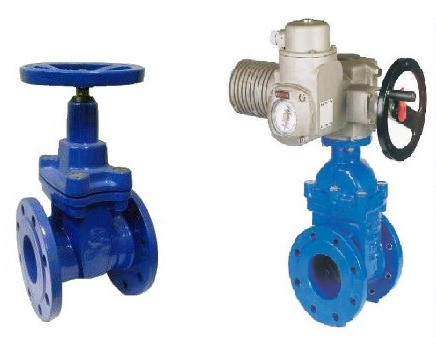
- gate valves — wedge, parallel, slide and pinch
- butterfly valves — flanged and wafer type
Industrial applications
Pipeline valves are used at oil and gas facilities, in power generation, at chemical plants and on industrial production sites.
The equipment ensures reliable operation of pipeline systems, control over process operations and safe running of production plant.
Supply and consultation
Asia Supply supplies pipeline valves from a range of Russian and European manufacturers. All equipment is certified and meets industrial service requirements.
Our specialists are ready to advise on selecting equipment and to help place an order. Products are shipped to any region on request.
Valve selection parameters
Pipeline valves are selected against a set of technical parameters. The nominal bore DN determines the throughput of the section — the standard range runs from DN15 to DN1400. The nominal pressure PN is set by the project: PN10–16 for utility pipelines, PN25–250 and above for industrial and oil and gas duty. The temperature range of the process medium governs the choice of body and seal materials.
The nature of the process medium is a separate, critical category. Carbon steel valves suit water and neutral liquids. For aggressive media — acids, alkalis, seawater — stainless steels 12Kh18N10T, AISI 304 and AISI 316 are used. For abrasive flows carrying solids, versions with wear-resistant lining are specified.
Body and seal materials
- Cast iron — for low-pressure systems, water and steam up to 16 bar
- Carbon steel — the principal material for oil and gas, pressures up to 100 bar
- Alloy steel — for high temperatures and aggressive media
- Stainless steel — for the food, chemical and pharmaceutical industries
- Bronze and brass — for potable water systems
Seals are chosen to match the medium and temperature: EPDM for water, NBR for petroleum products, PTFE for aggressive media, graphite sets for high-temperature duty.
Certification and standards
The valves supplied comply with GOST R 53672, GOST 9544, TR CU 010/2011 On the Safety of Machinery and Equipment and TR CU 032/2013 On the Safety of Pressure Equipment. For projects built to European standards, valves to EN 593 and EN 1267 with CE certification and PED marking are available.
Every shipment comes with a product passport, a certificate of conformity and, where required, a permit from Rostekhnadzor or the Industrial Development Committee of Kazakhstan for hazardous production facilities.
Related products
For complete pipeline system deliveries we also supply pipeline fittings (bends, tees, reducers, flanges), spacer rings for protective casings and bayonet end closures.
Shut-off, control and safety valves for pipelines
Industrial pipeline valves fall into three functional groups. Shut-off valves (ball valves, gate valves, butterfly valves) provide full isolation of the flow — the backbone of any process line. Control valves (valves with a regulating characteristic) allow the flow to be metered precisely and a set pressure or temperature to be held. Safety valves (relief valves, check valves, rupture discs) protect equipment against overpressure and reverse flow.
Designing a process section usually calls for a package of valves and equipment: shut-off valves at inlet and outlet, control valves on the branches, safety devices at the critical points. Asia Supply supplies the full set for each process scheme, so the customer receives compatible components in a single delivery.
Connection types
- Flanged — the standard for high-pressure industrial pipelines (oil and gas, chemicals, power). Allows repeated dismantling without welding.
- Threaded — for small-bore systems (DN15–80) at pressures up to 16 bar. Used in building services and process sub-systems.
- Butt weld — for high-pressure, high-temperature pipelines where flanged joints are not acceptable. Used on oil trunk lines.
- Union end — for connecting instrumentation and small-bore valves.
- Wafer type — a compact solution for butterfly and check valves clamped between two mating pipeline flanges.
Frequently asked questions about valve selection
How do I select a valve for a specific duty?
Selection is made against six parameters: nominal bore DN (from the pipeline diameter), nominal pressure PN (with a 25% margin over working pressure), medium temperature, type of medium (water, oil, gas, acids), function (isolation / control / protection) and connection type. Asia Supply selects valves against the customer's specification and supplies a schedule in project format.
What is the difference between shut-off and control valves?
A shut-off valve works in two positions — open or closed — and is not designed to throttle the flow in intermediate positions, which wears the seals quickly. A control valve has a purpose-shaped closure member (plug, cone, disc) and a flow characteristic (linear or equal-percentage) that holds a set flow at any intermediate position.
Which certificates are mandatory for valves at oil and gas facilities?
Mandatory: certificates of conformity to TR CU 010/2011 and TR CU 032/2013, a product passport stating DN/PN/T and materials, and a permit to use from the Industrial Development Committee of Kazakhstan for hazardous production facilities. Imported valves additionally require a CE certificate with PED marking for European products.
How much do pipeline valves cost?
Cost depends on the type (shut-off / control / safety), nominal bore DN, working pressure PN, and body and seal materials. Carbon steel ball valves DN15–50 start at ₸8,000; flanged gate valves DN100–300 from ₸80,000; large-bore control valves from ₸250,000. Exact pricing is calculated against the technical specification.
What are the delivery times for pipeline valves in Kazakhstan?
Standard items from stock — 3 to 7 working days including delivery within Kazakhstan. Made-to-order valves (special materials, non-standard versions) — 4 to 8 weeks from order confirmation. Expedited delivery by arrangement.
Can valves be ordered with verification and calibration?
Yes. Asia Supply supplies control valves with the flow characteristic calibrated at the factory, safety valves with the set pressure adjusted and sealed, and metering assemblies with an initial verification certificate. Documentation accompanies every delivery.
Related products
For a complete pipeline system delivery we also offer pipeline connecting fittings (bends, tees, reducers, flanges), spacer rings for protective casings and bayonet end closures for high pressure.